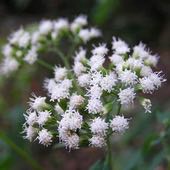
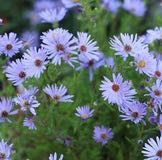
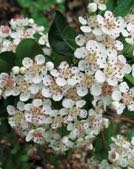
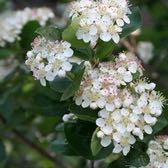
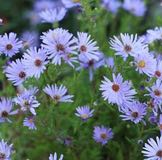
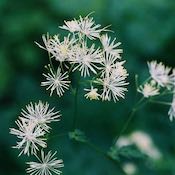
Ageratina altissima
Ecology
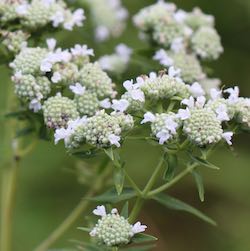
The plant blooms in the fall, from July to October. It is a larval host for a few varieties of moths, including the Clymene moth (Haploa clymene), Leucospilapteryx venustella, and the hitched dart moth (Melanchra adjuncta).
Toxicity
White snakeroot contains the toxin tremetol; when the plants are consumed by cattle, the meat and milk become contaminated with the toxin. When milk or meat containing the toxin is consumed, the poison is passed on to humans. If consumed in large enough quantities, it can cause tremetol poisoning in humans. The poisoning is also called milk sickness, as humans often ingested the toxin by drinking the milk of cows that had eaten snakeroot. Although 80% of the plant's toxin, tremetone, decreases after being dried and stored away for 5 years, its toxic properties remain the same.
During the early 19th century, when large numbers of European Americans from the East, who were unfamiliar with snakeroot, began settling in the plant's habitat of the Midwest and Upper South, many thousands were killed by milk sickness. Notably, milk sickness was possibly the cause of death in 1818 of Nancy Hanks Lincoln, mother of Abraham Lincoln.
It was some decades before European Americans traced the cause to snakeroot, although today Dr. Anna Pierce Hobbs Bixby is credited with identifying the plant in the 1830s. Legend has it that she was taught about the plant's properties by a Shawnee woman.
In addition to cattle, the plants are also poisonous to horses, goats, and sheep. Signs of poisoning in these animals include depression and lethargy, placement of hind feet close together (horses, goats, cattle) or held far apart (sheep), nasal discharge, excess*ive salivation, arched body posture, and rapid or difficult breathing. (Wikipedia)
Height 2' to 5"
Flowering July to October
Sun: Full sun to part shade
Water: Medium to wet